Tricks of the trade number 1

ribs

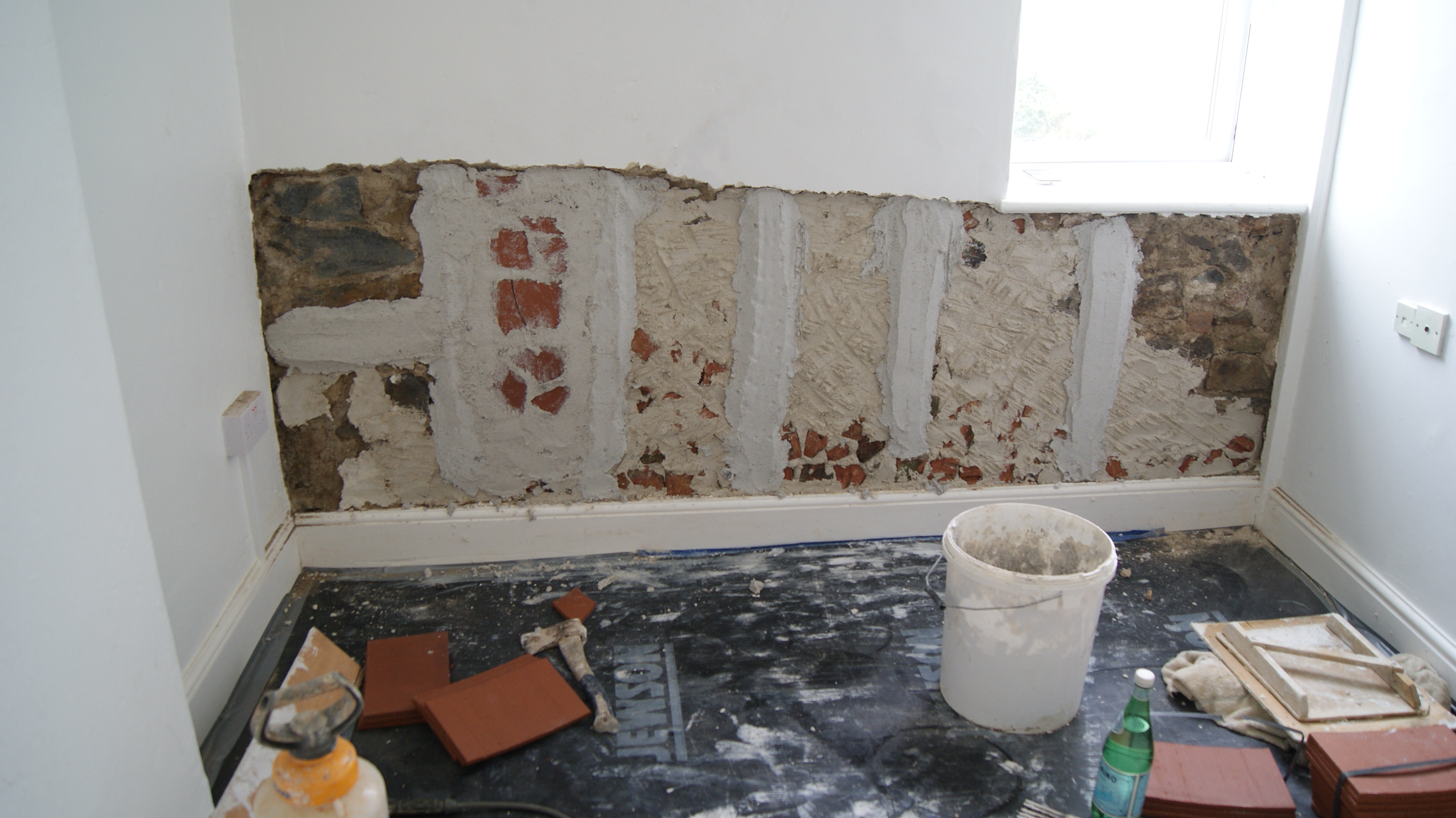
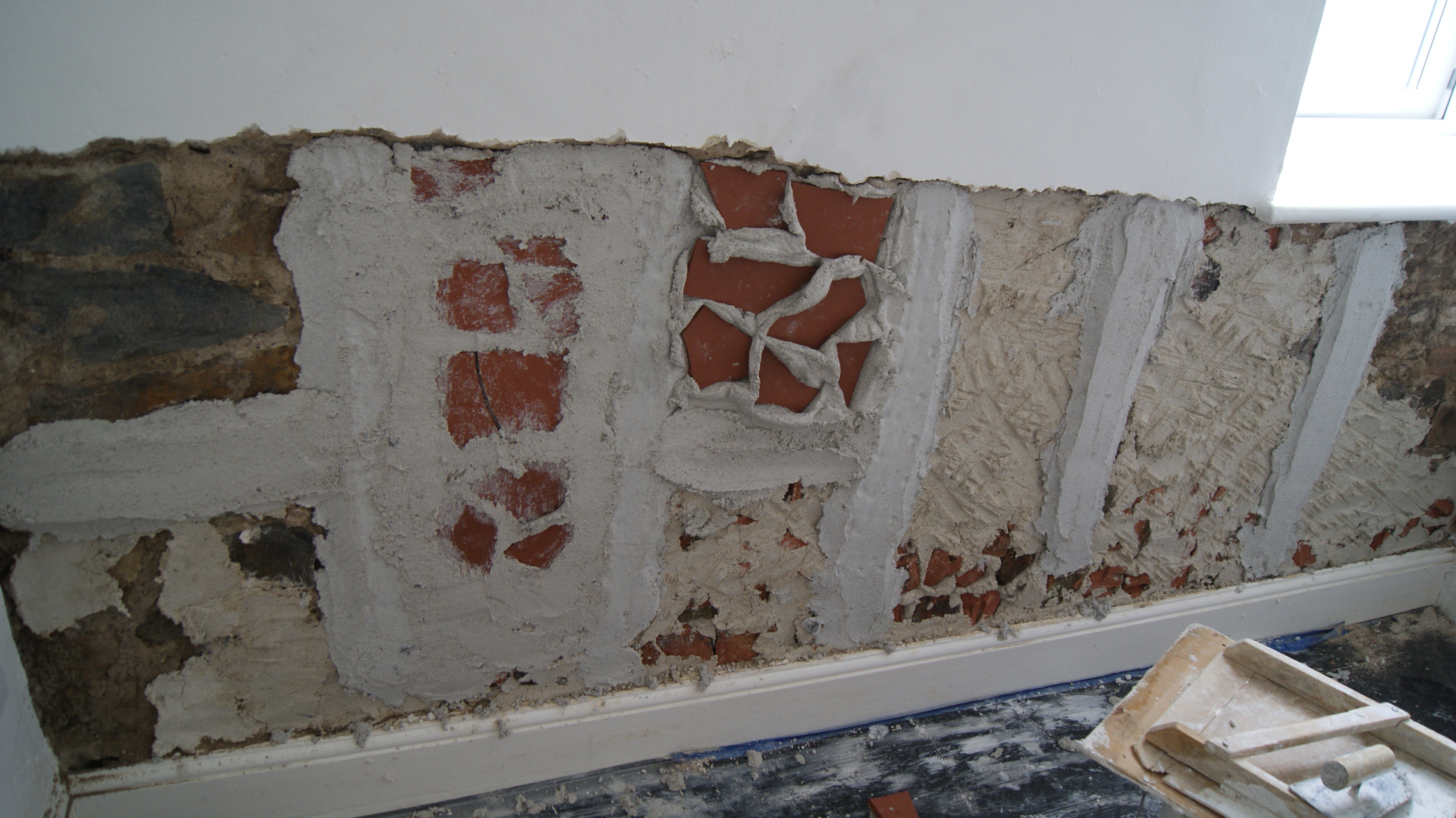
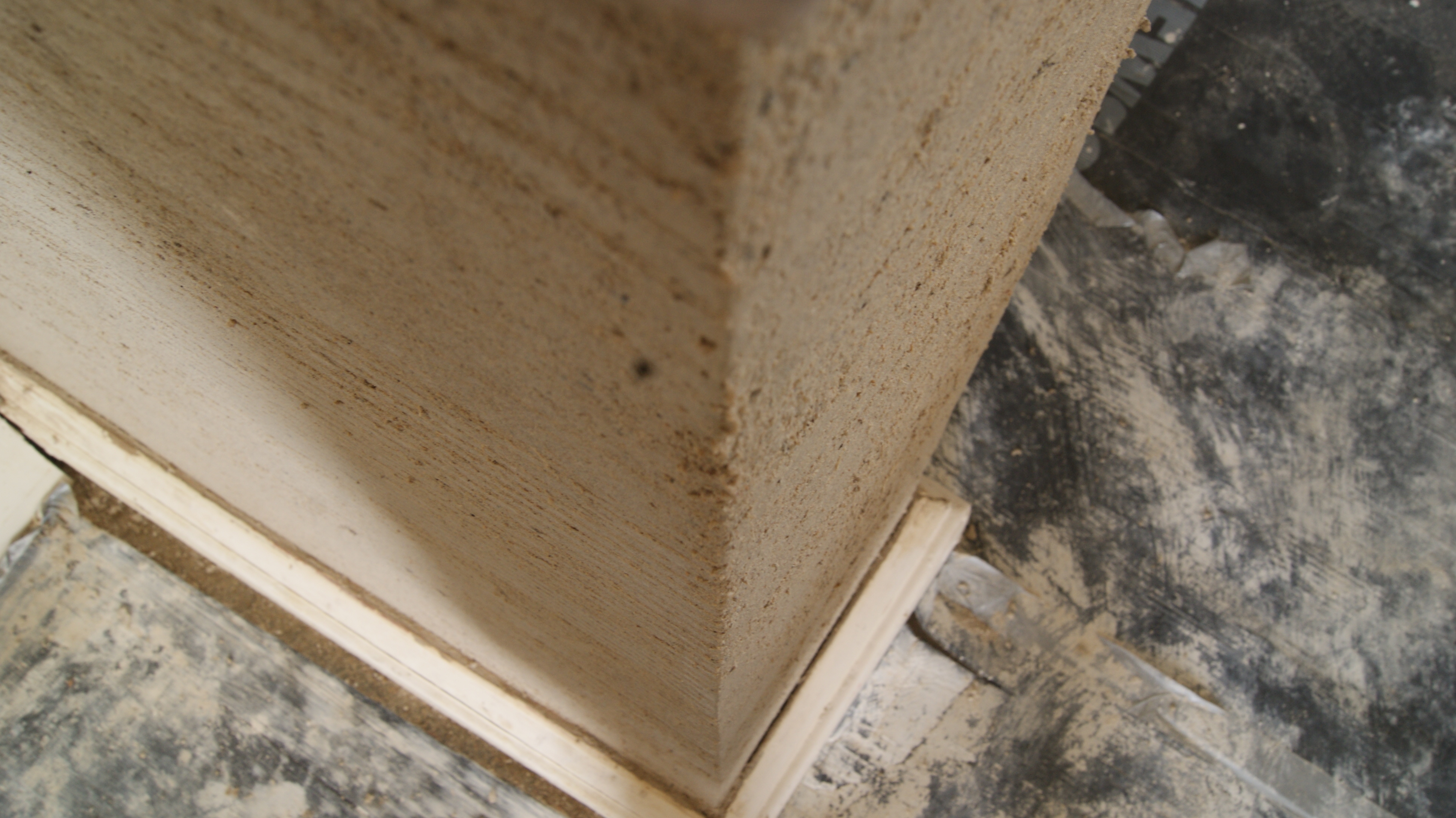
This wall, being damp, had over the years been repaired with a host of materials, plaster board, metal lath and cement, universal one coat and gypsum. All that was removed and the wall was pretty undulating and there was a lot of depth to be made up. To make things easier I made five vertical ribs with the plaster and brought them up to the required level for the first coat. I was pushing it a bit as it was plain at least three coats where required but time was not available so I had to do it in two coats and a finish coat i.e a scratch and a float coat. So given the depth I opted for this age old method; with the ribs giving me clear indication  of how much depth there was I got some plain terracotta roofing tiles and built up the thickness with them.

dubbing out

dubbing out with broken roofing tiles

The tiles take the place of some of the plaster and the ribs make sure you don’t pack the wall out too far, the ribs were all on the same level so that I knew that I would end up wit a flat wall.  There were places were no packing was needed and places were two layers were needed. but the process was easy and quick.

make sure the tiles are tapped deep into the plaster

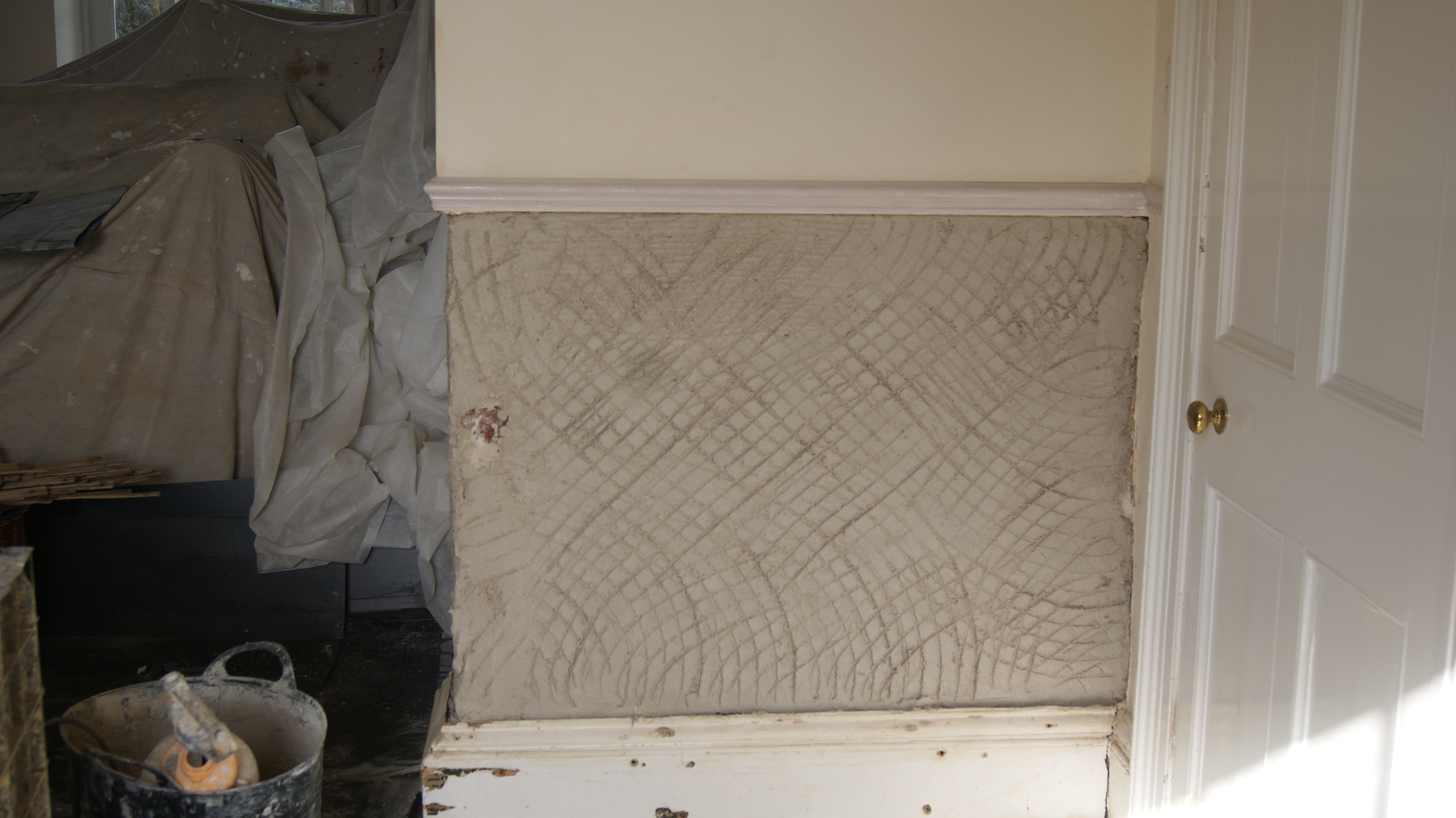
At the end the wall was level and the next day I was able to put the float coat on. Thereby successfully applying an inch and half of plaster in two coats with no risk of cracking.

This technique has been used for centuries and can even be seen in Pompeii.

ready for the float coat

ready for the float coat

Posted in Lime Plaster, technical stuff | 1 Comment

Lime for beginners training course. Cotswolds Rural Skills.

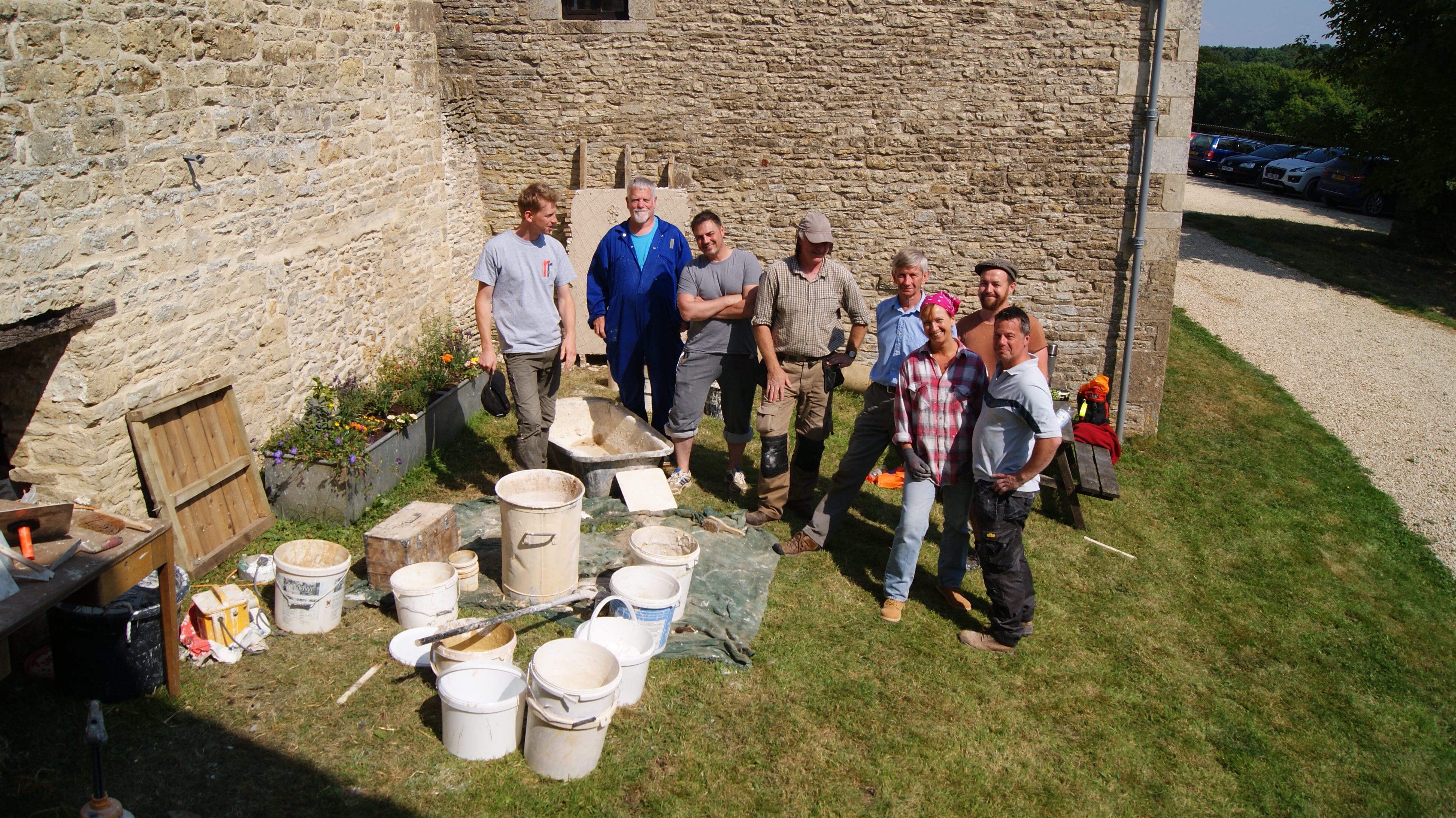
So another course has come and gone.

SONY DSC

We had fun. and sun.

and got a lot of work and learning done.

So what happens on a John Byrne led lime workshop? We start with an introduction to the ingredients: limestone, quick lime, hydrated lime (lime putty), sand. mortar, old mortar, and completing the lime cycle – stone again.

Calcium carbonate, calcium oxide, calcium hydroxide, calcium carbonate

we mix up some mortar, talk about recipes, and where to buy ready mixed mortars ,and when and how, we add horse hair to make  plaster. Then we practice pointing and practice plastering, dubbing out the wall, getting it level or at least not so uneven. The following day we look at finishing the pointing, pressing back and brushing off, we apply finishing plaster to our first days plastering,  smoothing the surface, plastering corners  All this is done on a real building not in some workshop on a concrete block wall, all the work produced by the participants  becomes part of the fabric of the building and builds, course on course, until the building has been repaired, pointed, plastered. The only recycled work is the Plastering on a lath panel. but its good to be able to see both sides.  Then we have a break from plastering and look at limewash and its pigmenting and application, and we end with lime slaking, which lays down lime for the next course.

SONY DSC


Posted in Training courses, Uncategorized | 1 Comment

I like this too

Posted in Uncategorized | Leave a comment

my favourite plastering technique video

A master of plastering – I aspire to this level of dexterity and cleanliness!

Posted in Lime Plaster, technical stuff, Training courses | Leave a comment

Plastering with my own Lime Rich Mortars

SONY DSC

SONY DSC

I have been lime plastering for a number of years and over those years I have usually bought in ready mixed course stuff and fine stuff, however I have recently developed my own finishing plaster as mentioned already and I think it is the best finishing plaster I have ever used and it should be as I developed it for that purpose.

Recently I began to think about the course stuff, that too could be better and I have just done a job where I made my own.

I have been thinking for some time that there is never enough lime in the mix. Most mixes nowadays are in the region of 1 part lime putty to 2 1/2 parts aggregate and in the Cotswolds that is usually a mixture of sharp sand and Cotswold stone dust. For me that is not enough lime.

The recipe I am using at the moment is 1 part lime putty to 2 parts sharp sand, this gives a really sticky mix to which can be added a lot of hair. It is a happy fact that when you add a lot of lime, the plaster will tend to crack as it dries out, but being so sticky it will hold more hair and that hair stops the cracking. This is a rule worth remembering, the stickier the mix the more hair it will take, of course the best way to get a sticky mix is to add more lime putty – not more stone dust.

Lime putty has never been easier to produce so why skimp on it?

Once you have a really sticky plaster the technique of plastering changes – you don’t really spread it on directly off the hawk but apply it to the wall in dollops and then spread it flat, it’s amazing how easy the process of plastering becomes when the mix is right (and how difficult the job is when the mix is wrong).

Another penny dropped the other week when I saw a scratch coat of render that hadn’t rendered the wall flat, it was almost as bumpy as before. there is no point in this, if you are after a flat wall the scratch coat is the time to get it flat – dub it out to even out the surface, apply the first coat, get that as flat as possible and any undue thickness, due to the undulating surface might well crack a little, even with plenty hair, but this cracking is in the first coat and as long as the plaster hasn’t become detached from the wall (which can happen) it is of little consequence. Once you get it flat, and you can use a straight edge such as a rule, or derby float for this, then you scratch it ready for the next coat.
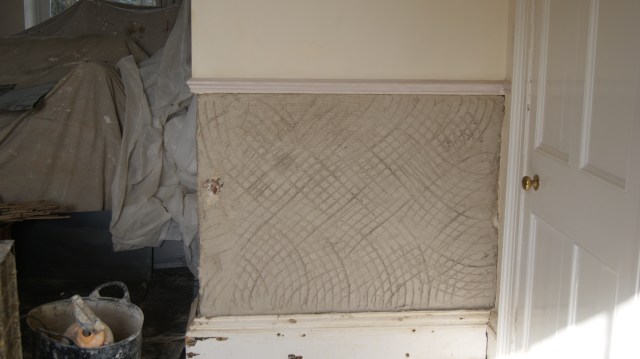
Scratch coat applied

The next coat is now easy to apply, it is of even thickness, dries even and is easy to get flat. This second coat is brought up to within 4 mm of the final level and trowelled or floated flat, corners crisp or nicely rounded.

second coat ready for the finishing coat

The finishing coats can then be applied in a couple of passes and trowelled flat and smooth.  By getting the wall flat as soon as possible makes every other stage really easy and efficient.

All of this is so much easier with a mix with 33% lime putty by volume and loads of hair – you really do need to be able to see the hair in the mix – they need to be really obvious – horse hair is best, don’t bother buying the nicely wrapped in string stuff, find yourself a friendly horse owner or two and ask them for the hair off their horses. It’s cheap and it works great.

so there you have it my own recipe from now on is a minimum of 33% lpbv (lime putty by volume) for backing coats and a minimum of 60% for the top coat.

Lime rich, fibre rich mortars for excellent results

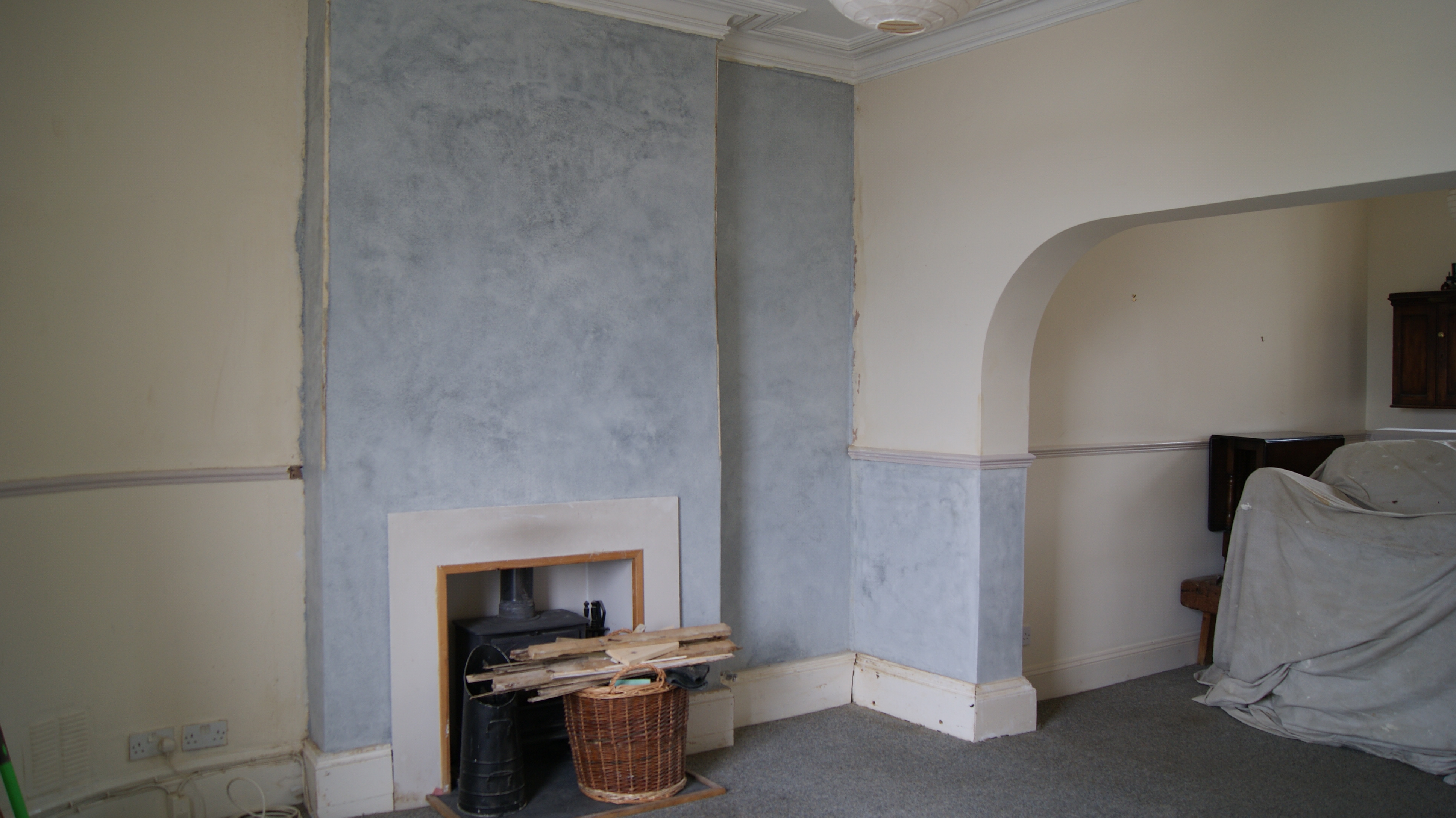
(The blue colour is caused by the slate granules used in recipe for the top coat – 66% lime putty : 33% slate granules – it will dry white of course)

finished!

SONY DSC

just needs the dado rail and fire surround fitting… and the skirting painting.

by John Byrne ~ Artisan Lime Plasterer

Posted in Lime Plaster, technical stuff | Leave a comment

JB Lime Finishing Plasters

The first field trials began this week. After a number of weeks of trials, adjusting recipes and readjusting recipes I sent 130 litres to the Cotswolds to be applied by someone else outside of my own house.

The feedback was most gratifying:

“Easy to use” I gave it one good coat and then kept going back and trowelling it up. It is very nice to use, closes in so well you get a lovely flat finish – it’s the best I’ve used.”

There is a facebook page  now as well –

https://www.facebook.com/jblimefinishingplasters

I supplied it at 58% lime putty by volume. (that’s 10 units of lime putty to 7 units of aggregate). I won’t be using all this 3:2, 1:2 etc I want to be clear about just exactly how much is lime putty without any ambiguity.


Posted in Lime Plaster | Leave a comment

JBlime finishing plasters

JBLimeplastering will soon be producing high quality lime finishing plasters, They are designed to overcome the drawbacks of many other ready mixed finishing plasters,

They are designed to minimise cracking, to spread easily, to be applied up to 4mm thick and to set hard.

They will be suitable for most substrates including plasterboard.

They will initially be available in two grades with the finest being designed to give a finish similar to modern gypsum plasters.

Although easy to use they will still require the usual care and attention as any other lime plaster.

They will not feature hydraulic lime or artificial binders and will typically contain more than 50% calcium hydroxide by volume.


Posted in Lime Plaster, technical stuff | Leave a comment

NEWS

John Byrne – director of JBLimeplastering has moved to Appledore, North Devon. Although JBLimeplastering is still operating in Gloucestershire it is branching into the SW peninsula creating and repairing lath and plaster walls and ceilings and other lime plastering projects – Training and Advice, Limewash colour matching and consultation.

Posted in Uncategorized | Leave a comment

The colour of a house

One of the privileges I enjoy is the opportunity to make my mark on the landscape, and when a client has the boldness to choose a rich colour for their house it is a chance to make a statement.

The project involved the removal of a white painted cement roughcast render on the gable and replacing it with a low profile lime roughcast render. Following on from a previous project of lime washing the panels in the timber framed elevation and removal of masonry paint from the rubble masonry and it’s replacement with lime wash, this second stage project continued the colour scheme and will be added to with the removal of further swathes of white masonry paint on two more elevations sometime in 2016

a white painted cement rendered gable

Choosing a limewash colour can take some time as there is such a variety of shades and tones that can be achieved even with the basic pigments of yellow ochre, raw and burnt umbers, red oxide and black.  The first thing is to establish the colour will dominate: red or yellow, then how the colour is to be influenced; will it be green yellow or a brown yellow, a purple red or an orange red.  then we have to decide on the depth of colour.  I am not a musician but it reminds me a bit of how a tune might be constructed, the dominant colour leading the melody, other colours coming in to add complexity with the umbers acting as the bass to bring richness to the tune.

All this colour design is done with the landscape and location in mind, in this case the soil and stone colour is in the red category so that gave us our starting point for or theme, but we wanted something more refined than a simple red oxide and we certainly didn’t want pink or peach.

I think we got it right what say you?

swan house

We entertained ourselves on this project by a little experiment: nothing too outlandish or risky it was just that I had a few feather pillows to get rid of so I added the feathers to the render. So this render is reinforced with feathers as well as hair. which I think is fitting as the house is called Swan House.

SONY DSC

swan house in its habitat

It is so pleasing when a customer is bold enough to go with a colour this rich rather than the more conservative ice cream colours of the houses in the foreground. the trick is for it not to be too loud and garish. It must look like it belongs there not like it’s on a day trip.


Posted in limewash, Roughcast render, Uncategorized | Leave a comment

Apparently the top search on this site is for  “correct mix ratio silver sand nhl2 lime” .

I can answer that, There is no correct ratio but a good one would be between one and one and half portions of sand to one portion of NHL2.

did you know that there is no really discernible difference between Playpit sand, Silver sand and Kiln dried sand.

Pompeii

DSC03293


According to one of our guides in Naples red was the predominant colour used in the City as it was the colour of Pompeii. But this plaster shows the yellow gradually turning red. knowing that yellow ochre when heated sufficiently turns red and considering the heat that the plasters of Pompeii were subjected to, and with the evidence of this picture, I might suggest that Pompeii was Yellow rather than red.


Posted on by byrnesurfaces | Leave a comment